
If It’s Beige, It’s Not Coming Home (Kidding… sort of)
I have a rule that makes people laugh… until they realise I’m not kidding.
If it’s beige, it’s not coming home.
Kidding… sort of.
Because beige isn’t the problem. Beige can be beautiful. Beige can be calming. Beige can be chic.
But beige can also be the default setting when no one wants to make a decision. And that’s when a space starts to feel like… nothing. Safe. Forgettable. Like it could be anywhere.
And if I’m booking a stay, renovating a home, or buying a piece for one of our projects… I want it to feel like something.
My beige panic (yes, it’s real)
I’ll admit it. I actually start to feel a little panicky when I catch myself choosing beige.
Not because it’s “bad”. But because it’s usually a sign the styling puzzle has gotten too hard and my brain is trying to take the easiest exit.
My subconscious fully goes:
“Stuff it. Just go beige. It’ll match.”
Sounds like a win win, right?
Wrong.
Because in that moment, beige isn’t a design choice. It’s a stress response.
This literally happened to me in the Hyams kitchen planning phase about a week ago. I caught myself drifting into safe and had to go:
hang on… am I choosing this because it’s right, or because I can’t find the answer and I’m over trying?!
And to be fair, the splashback decision I’ve made is pretty out there. I haven’t really seen it done before… so yes, there is every chance I could absolutely stuff the kitchen up.
But that’s the thing with design. For me, I’d rather take a risk I think will pay off than default to beige because it feels “safe”. If I’ve completely cooked it, I’ll hold my hands up. But at least it won’t be boring
Beige items that try to sneak into my cart
These are the usual offenders. They show up when I’m tired and my brain wants an easy life:
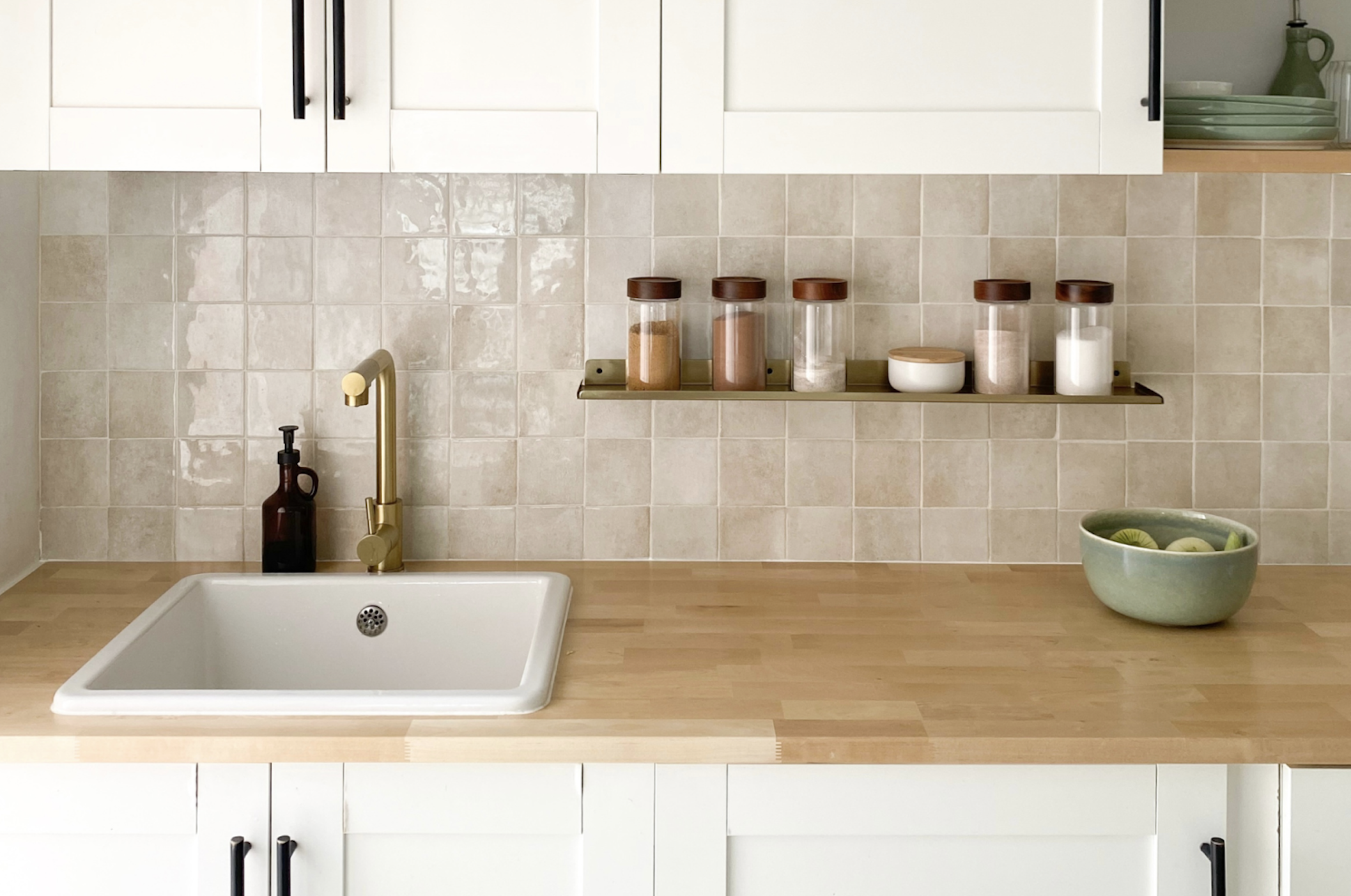
The beige tile splashback. But it has texture though?? So that should be ok?? (This is how it starts.)
The linen cushion in “Oatmeal” (why is it always oatmeal).
The boucle chair that looks cute online and then arrives with zero neck support and major waiting room energy.
The “natural jute rug” that’s basically a beige doormat for a whole living room.
The “timeless” pendant light that is actually just… invisible.
The paint colour called “Soft Cloud” that turns into “Greige Sadness” the second it hits the wall.
If you’ve bought any of these, you’re not alone. Those tiles nearly ended up in my cart too.
What I do instead (so I don’t end up in accidental beige land)
I stopped making “rules” and started doing this:
1) One hero decision
Just one. One thing that makes the room interesting.
A light. Art. A tile moment. A chair. A slightly bold fabric. Anything.
One good decision fixes ten beige ones.
2) Texture like your life depends on it
If the palette is calm, texture has to be the personality.
Timber. Linen. Boucle. Stone. Hand made bits. Anything that stops the room looking flat.
3) A tiny bit of contrast
Even in a neutral space, you need a little bite.
A darker rug. Black hardware. Warm timber. A moody accent. Not much. Just enough.
That’s it. That’s my “system”. Not a rule book. A lifeline.
Beige in accommodation (my gentle warning)
If you’re a host, beige feels safe. I get it.
But the places I remember are the ones with a point of view. The places I screenshot, send to friends, and talk about later. The ones that feel like a mood, not a template.
The bottom line
Beige isn’t banned. Beige just needs to be chosen on purpose, not because you’re tired and your brain has given up.
So yes. If it’s beige, it’s not coming home.
Kidding… sort of.